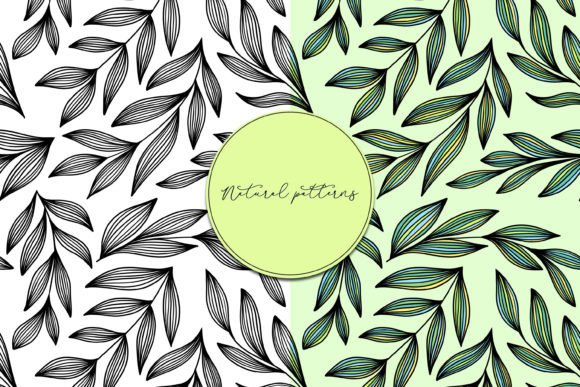
Natural Patterns: Seamless Branching Designs for Versatile Creative Applications
Seamless patterns built from natural branching structures—think fractal-like tree limbs, vascular networks, coral growth forms, or mycelial filaments—offer more than aesthetic appeal. They embody a deep-rooted logic found across biology, physics, and mathematics: self-similarity, efficient resource distribution, adaptive resilience, and organic continuity. When translated into digital design assets, these Natural Patterns become powerful tools—not just decorative elements, but functional frameworks that support clarity, cohesion, and contextual harmony across diverse media.
What Makes a Branching Pattern “Seamless” and Why It Matters
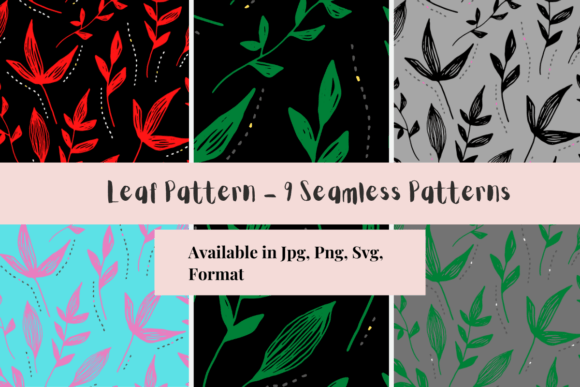
A seamless pattern repeats infinitely in all directions without visible seams, breaks, or alignment artifacts. In branching-based designs, seamlessness is especially challenging—and valuable—because branches carry directional energy, implied motion, and hierarchical relationships. A well-constructed seamless branching pattern preserves not only visual continuity at tile edges but also structural integrity: junctions align meaningfully, line weights remain consistent across boundaries, and negative space flows naturally between iterations.
This isn’t merely a technical achievement—it’s a usability necessity. Designers embedding these patterns into textiles, packaging, web backgrounds, architectural cladding, or UI overlays need assurance that scaling, tiling, or zooming won’t introduce jarring discontinuities. Unlike rigid geometric repeats (e.g., grids or chevrons), branching patterns simulate growth. Their seamlessness mimics how nature expands: no hard edges, no forced repetition—only gentle, logical extension.
Core Characteristics of High-Utility Natural Patterns with Branching Logic
Not all branching motifs translate equally well into practical design assets. The most effective Natural Patterns share several observable traits:
- Scalable hierarchy: Primary branches subdivide into secondary and tertiary elements at perceptible but non-distracting ratios—often approximating the golden angle (≈137.5°) or Fibonacci spacing—supporting legibility at both thumbnail and wall-sized scales.
- Directional neutrality: Though rooted in growth metaphors, top-tier patterns avoid strong upward/downward bias unless intentionally designed for vertical applications (e.g., floor-to-ceiling murals). Instead, they balance radial, horizontal, and oblique flow to accommodate rotation and reorientation.
- Variable density zones: Real organic systems aren’t uniformly dense. High-quality branching patterns include subtle gradients in line frequency—tighter clusters near “trunk” origins, gradual thinning toward peripheries—enabling selective emphasis without manual masking.
- Context-aware transparency: Because these files ship with transparent PNG and EPS layers, designers retain full control over underlying color, texture, and typography. A branching vine pattern doesn’t compete with body text—it frames it, recedes behind icons, or subtly reinforces information architecture through implied connection.
Practical Applications Across Disciplines
The versatility of seamless branching patterns emerges most clearly when viewed through real-world usage—not as abstract visuals, but as functional components within larger systems.
Educational Materials and Scientific Visualization
Teachers illustrating neural pathways, ecological food webs, or molecular bonding often rely on hand-drawn schematics that lack scalability or reproducibility. Branching-based Natural Patterns serve as modular scaffolds: educators layer labeled nodes onto repeating branch structures to demonstrate systemic interdependence. A biology instructor might use a single tile to generate an entire poster-sized diagram of photosynthetic electron transport—each branch representing a protein complex, each junction a redox step—without redrawing connections manually.
Sustainable Branding and Packaging Design
Brands emphasizing regenerative values—organic skincare, eco-conscious apparel, circular-economy startups—increasingly adopt branching motifs to signal growth, renewal, and interconnected responsibility. A seamless pattern applied to kraft-paper labels creates tactile rhythm without ink waste; repeated across recyclable mailers, it forms a quiet narrative of expansion and return. Crucially, because the pattern lacks hard edges or synthetic symmetry, it avoids the “corporate clip-art” effect—feeling grounded rather than generic.
Digital Interfaces and Spatial Computing
In UI/UX contexts, branching patterns function as sophisticated background textures that enhance depth perception without sacrificing accessibility. Used beneath data dashboards, they provide gentle visual anchoring—guiding the eye along implied paths while maintaining WCAG-compliant contrast ratios (especially when rendered in low-saturation monochrome variants). In AR environments, tiled branching assets projected onto physical surfaces simulate root systems or capillary networks, helping users intuit spatial relationships in training simulations for civil engineering or medical device operation.
Textile and Surface Design
Fashion and interior designers leverage the inherent rhythm of branching structures to create movement in static fabrics. A scarf printed with a seamless fern-frond pattern gains kinetic energy as it drapes and folds; the same motif scaled larger on acoustic wall panels absorbs sound directionally—thicker branch zones dampen mid-frequencies, thinner termini scatter highs. Because the pattern repeats invisibly, yardage production remains cost-efficient, and custom-fit upholstery retains continuity across seams.
Technical Advantages Embedded in the Delivery Format
Each purchase delivers a ZIP archive containing six precisely aligned files—all derived from a single vector source—ensuring consistency across workflows:
- EPS (Encapsulated PostScript): Editable in Adobe Illustrator and Affinity Designer. Retains full layer structure, allowing designers to isolate trunk paths, adjust stroke profiles, or recolor individual branch tiers without raster degradation.
- JPEG (RGB, white background): Optimized for quick preview, CMS uploads, and print proofs where transparency isn’t required. Sharpened for crisp output up to 300 DPI.
- PNG (24-bit, transparent background): Preserves alpha channels for web, mobile apps, and layered compositing in Figma, Sketch, or After Effects. Includes anti-aliased edges for smooth integration over gradients or video.
This tri-format approach eliminates common friction points: no need to remove backgrounds manually, no risk of pixelation when scaling SVGs in older browsers, and no licensing ambiguity around commercial modification. The files are production-ready—not placeholders.
Considerations for Thoughtful Implementation
While branching patterns offer broad utility, their impact depends on intentional deployment. Three considerations consistently separate effective use from visual clutter:
Scale Relative to Content
A pattern designed for wallpaper may overwhelm a business card. Observe how branch density interacts with surrounding elements: if body text sits atop the pattern, ensure minimum line spacing exceeds the thickest branch width by at least 1.5×. Test readability using actual content—not grayscale mockups.
Color Strategy and Perceptual Weight
Branching structures carry inherent visual weight. A dark, high-contrast pattern competes aggressively; a light, desaturated version recedes gracefully. For accessibility, avoid pairing fine terminal branches with low-luminance colors—these can flicker or vanish for viewers with astigmatism or mild visual impairment. Testing with browser contrast checkers and real-device previews is essential.
Intentional Breaks in Continuity
Paradoxically, the strongest use of a seamless pattern sometimes involves breaking its seamlessness. Placing a deliberate “gap” where branches terminate before reaching an edge—mimicking natural truncation—can anchor layouts, define zones, or highlight focal content. This requires manual adjustment, but the editable EPS file makes such interventions precise and repeatable.
Why These Patterns Endure Beyond Trend Cycles
Unlike stylistic flourishes tied to specific eras—grunge textures of the ’90s, skeuomorphic buttons of the early 2010s—branching-based Natural Patterns draw from enduring principles. They reflect how humans instinctively map relationships: we understand trees, rivers, lightning, and blood vessels not as isolated shapes but as dynamic systems. That cognitive resonance translates directly into user experience: interfaces feel intuitive, learning materials feel coherent, and brand narratives feel authentic—not because they follow current aesthetics, but because they echo how we’ve understood complexity for millennia.
Moreover, these patterns scale ethically. They require no stock photography licenses, generate no AI-training data concerns, and involve no generative hallucinations. Each curve, junction, and taper was crafted through observation, iteration, and respect for biological precedent—making them not just visually rich, but epistemologically grounded.
Getting Started Responsibly
If you’re evaluating whether seamless branching patterns suit your project, begin with constraints—not possibilities. Ask: What problem does continuity solve here? Where does implied connection strengthen comprehension? Does this pattern help users see relationships they’d otherwise miss?
For teams integrating these assets, consider establishing internal guidelines: minimum safe scale thresholds, approved color palettes for accessibility, and documentation of how specific branch densities correlate with content types (e.g., “medium-density vines = data visualization overlays; low-density filaments = immersive environment backdrops”). Such practices transform a design element into a shared language.
Should questions arise about customization, licensing scope, or technical implementation—whether you’re adapting the pattern for CNC milling, projecting it onto irregular architectural surfaces, or converting it for embroidery digitizing—reach out directly. Clarity benefits everyone, and thoughtful application always begins with dialogue.