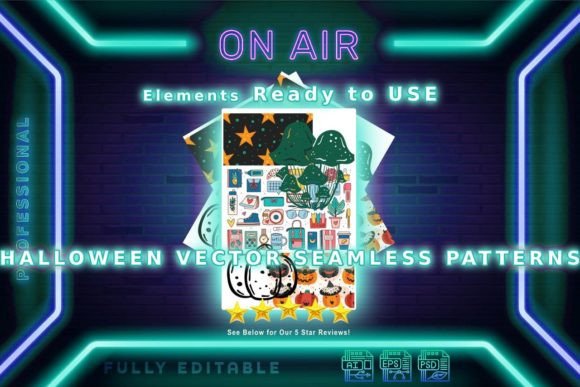
Halloween Vector Seamless Patterns
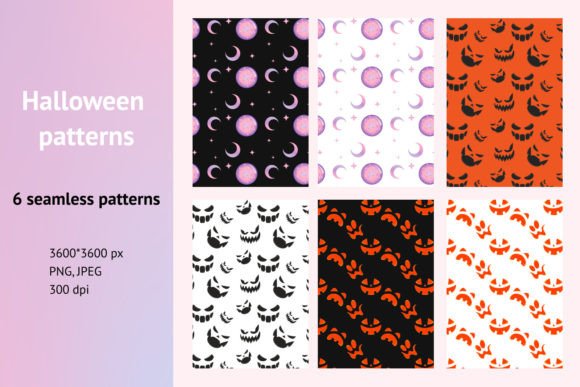
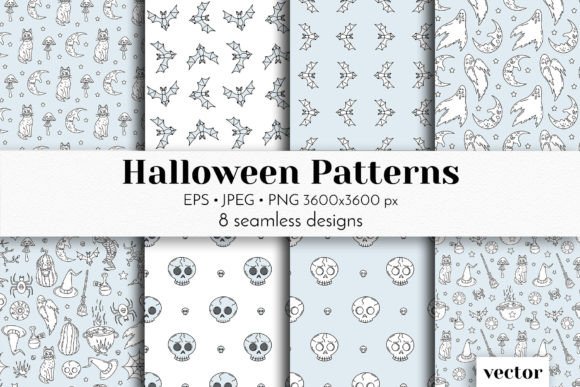
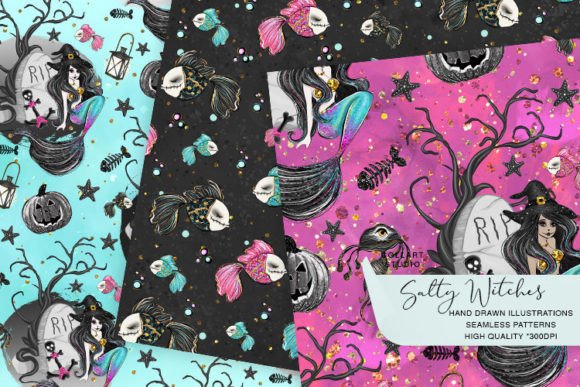
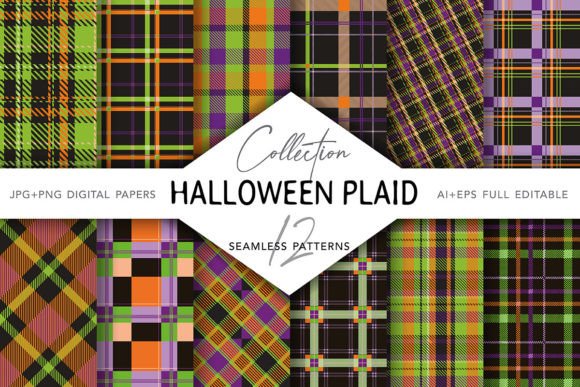
Designers, marketers, and small business owners increasingly rely on high-quality, flexible assets to bring seasonal campaigns to life—especially during peak creative windows like autumn. Halloween Vector Seamless Patterns meet that need with precision: thoughtfully crafted, scalable, and production-ready. These aren’t generic clipart bundles or low-res stock images. They’re purpose-built vector patterns—repeating motifs of pumpkins, bats, ghosts, leaves, acorns, and warm-toned botanicals—that tile flawlessly across any surface, digital or print.
Why Seamless Matters—Beyond Aesthetics
Seamless patterns solve a real workflow problem: consistency at scale. Whether you’re designing social media templates, wrapping paper for an Etsy shop, packaging for a local cider brand, or classroom decorations for a school event, repetition must feel intentional—not stitched together. A true seamless pattern eliminates visible seams, jagged edges, or alignment hiccups when tiled. That’s where editable vectors shine. Unlike raster files that blur or pixelate when enlarged, SVG and EPS formats retain crispness at any size—critical for large-format printing (think banners or window decals) or responsive web use (like animated background tiles).
What sets these Halloween Vector Seamless Patterns apart is their dual-season relevance. Many designs intentionally blend classic Halloween iconography with soft, earthy “Hello Autumn” elements—think matte orange gourds beside hand-drawn maple leaves, or ghostly silhouettes floating above textured wheat stalks. This crossover reflects how consumer expectations have shifted: people no longer separate “autumn” from “Halloween.” They want warmth, nostalgia, and subtle spookiness—not just candy corn and cobwebs.
File Formats That Fit Real Workflows
The inclusion of PNG, JPEG, SVG, and EPS files isn’t just about compatibility—it’s about intentionality in execution:
- PNG files offer transparent backgrounds and sharp detail—ideal for quick mockups, social media overlays, or adding texture to Canva or Figma projects without worrying about white borders.
- JPEG files provide lightweight, universally supported versions for email newsletters, blog headers, or internal presentations where file size matters more than transparency.
- SVG files are the go-to for web developers and modern designers using CSS background-repeat or embedded inline graphics. They scale infinitely, load quickly, and support light interactivity (e.g., hover effects on a website banner).
- EPS files remain essential for professional print workflows—especially when handing off to commercial printers who require CMYK-ready, editable vector art with layered paths and text outlines.
This multi-format approach mirrors how professionals actually work today: switching between tools (Adobe Illustrator, Affinity Designer, Figma, Cricut Design Space), platforms (Shopify, Mailchimp, WordPress), and output needs (digital ads, merch, signage, lesson plans) — often in a single afternoon.
Editable Vectors: Control Without Compromise
“Editable vectors” means more than just “you can open it in Illustrator.” It means each element—every leaf vein, bat wing curve, or pumpkin stem—is a path you can recolor, resize, reposition, or delete without breaking the pattern’s integrity. You’re not locked into preset palettes or fixed compositions. A bakery owner can shift all colors to match their brand’s terracotta-and-cream scheme. An educator can isolate individual icons to build vocabulary flashcards. A freelance designer can extract a single motif to use as a watermark or favicon.
This level of control aligns with broader shifts in creative tooling. As AI-assisted design tools become more common, users still value human-led refinement—and editable vectors empower exactly that. Rather than accepting a generated output as final, creators use these patterns as intelligent starting points: adjusting spacing, swapping motifs, or layering textures to create something distinctively theirs.
How Trends Are Shaping Seasonal Design Choices
Three quiet but powerful trends are reshaping how professionals approach seasonal visuals—and why Halloween Vector Seamless Patterns fit so naturally into current practice:
- Authenticity over polish. Audiences respond better to handmade-feel illustrations—slight line variations, organic shapes, muted palettes—than overly symmetrical, hyper-polished graphics. The included Hello Autumn illustrations lean into this: imperfect leaf edges, subtle grain textures, and gentle gradients that evoke real October light—not cartoonish saturation.
- Multi-use efficiency. Small teams and solopreneurs can’t afford to commission new assets for every campaign. A single seamless pattern set might serve a coffee shop’s fall menu board, its Instagram story highlights, its loyalty program cards, and its holiday gift wrap—all within one month. That’s ROI measured in time saved and visual cohesion maintained.
- Platform-aware flexibility. Designers no longer build “one version for all.” They anticipate where an asset will live: a square crop for Instagram, a tall vertical for Pinterest, a wide banner for a Shopify homepage. Because these patterns are seamless and vector-based, adapting them to different aspect ratios or resolutions requires minutes—not hours.
Practical Applications Across Roles
These patterns aren’t niche—they’re utility-grade. Here’s how different users apply them meaningfully:
- Bloggers & content creators use PNG overlays to add subtle seasonal texture to quote graphics or newsletter headers—without distracting from the message.
- Educators import SVG files into cutting machines to create tactile learning aids: matching games with pumpkin-shaped cards, or laminated autumn-themed word walls.
- Local retailers adapt EPS files for custom-printed tote bags, window clings, or receipt tape—building neighborhood recognition through consistent, warm visual language.
- Freelance designers embed SVG patterns directly into client websites via CSS, creating immersive, branded landing pages that load fast and look sharp on mobile and desktop alike.
- Hobbyists & crafters combine JPEG and SVG layers in Cricut or Silhouette software to cut layered vinyl decals—or print and hand-finish greeting cards with gold foil accents on select motifs.
What’s Changed—And Why It Matters Now
Fifteen years ago, seasonal design meant buying a $29 CD-ROM of clipart and hoping the resolution held up. Ten years ago, it meant sifting through thousands of uncurated Shutterstock results, then manually removing backgrounds or resizing with quality loss. Today, creators expect assets that are both expressive and engineered—designed with technical constraints (print bleed, web performance, accessibility contrast) in mind from day one.
Halloween Vector Seamless Patterns reflect that evolution. They’re not just “for Halloween”—they’re built for how people actually create now: faster, across more channels, with less room for error, and higher expectations for visual harmony. The Hello Autumn illustrations reinforce that. They don’t shout “OCTOBER!” They invite attention gently—through color temperature, thoughtful negative space, and motifs that feel lived-in rather than trend-chasing.
A Note on Longevity and Reuse
Unlike trend-dependent graphics that feel dated by November, these patterns prioritize timeless structure over fleeting novelty. A well-designed seamless pattern doesn’t rely on viral memes or short-lived aesthetics. Instead, it uses enduring compositional principles: balanced rhythm, harmonious scale relationships, and intentional contrast between positive and negative space. That’s why many users report returning to the same set year after year—not to reuse identical files, but to reinterpret them. One year, they emphasize the botanical elements; the next, they isolate the spectral motifs and pair them with deep indigo and charcoal for a moody, modern take.
That kind of longevity isn’t accidental. It’s the result of designing for function first—then letting expression follow.