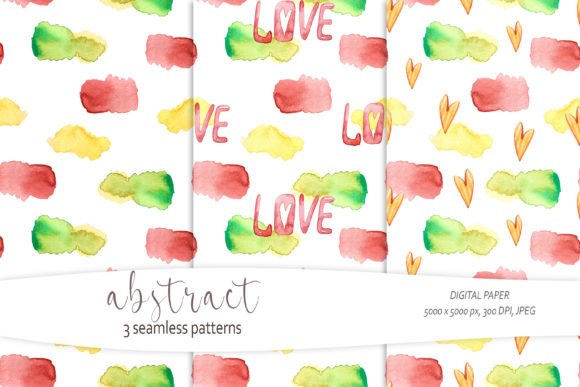
Watercolor Abstract Seamless Patterns
There’s a quiet power in texture that moves beyond decoration—it builds mood, signals quality, and quietly reinforces identity. Watercolor Abstract Seamless Patterns do exactly that: they bring organic softness, fluid movement, and hand-crafted authenticity to surfaces that might otherwise feel flat or generic. Unlike rigid geometric repeats or overly saturated digital motifs, these patterns breathe. They’re made with real pigment behavior in mind—blends that feather, edges that fade, and color transitions that mimic how water interacts with paper. That realism is why designers, textile artists, and product creators keep returning to them.
What Makes These Patterns Stand Out
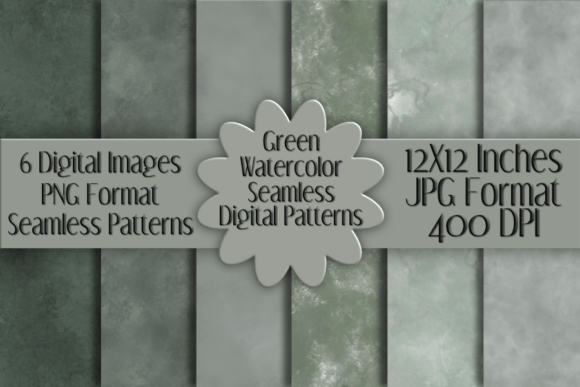
These aren’t just “watercolor-style” graphics slapped into a repeat grid. Each pattern is built from original, hand-painted watercolor elements—scanned at high resolution, digitally refined for consistency, then meticulously tiled to eliminate visible seams. The result? Three high-resolution JPEG files (5000 x 5000 px, 300 dpi), ready for professional printing without pixelation or distortion.
Key strengths include:
- Natural variation—no two swatches look identical, preserving the spontaneity of real watercolor;
- True seamless tiling—tested across multiple tile sizes and orientations to ensure clean, invisible repeats;
- Print-ready density—300 dpi at full scale means crisp output on fabric, wallpaper, stationery, or ceramic;
- Neutral-yet-characterful palette options—designed to complement rather than compete, whether layered under typography or used as a primary surface treatment.
Real-World Uses Across Contexts
You don’t need to be a fashion house or interior brand to get value from Watercolor Abstract Seamless Patterns—but those teams use them daily. Here’s where they show up, and why:
Fabric & Textile Design
Think baby onesies with gentle washes of blush and sage, or linen duvet covers where the pattern reads as tone-on-tone from afar but reveals subtle granulation up close. Because these patterns scale cleanly, they work equally well on narrow-width cotton for quilting and wide-format polyester for upholstery. A textile freelancer told us she uses one of these as a base layer beneath embroidery—its softness makes stitches pop without visual competition.
Scrapbooking & Stationery
For paper crafters and small-batch stationery makers, seamless watercolor backgrounds add depth to printed cards, journal inserts, and digital planners. Unlike flat color fills, they give printed pieces tactile warmth—even on uncoated stock. One educator uses them to design printable classroom posters: the organic flow helps reduce visual fatigue during long reading sessions, especially for neurodiverse learners.
Product Surface Decoration
Mugs, tote bags, ceramic trays, and even phone cases gain instant personality when wrapped in a watercolor abstract repeat. Because the patterns avoid hard edges and sharp contrast, they age gracefully—no “digital fatigue” after repeated viewing. A boutique gift shop owner reported a 22% lift in basket add-ons when switching from vector florals to these watercolor-based designs on reusable cotton totes.
Digital & Brand Applications
They’re not just for print. Designers drop these patterns into UI backgrounds (with opacity adjustments), email headers, or presentation slide decks to soften corporate visuals without sacrificing polish. One marketing agency layers them subtly behind client testimonials—creating breathing room while reinforcing a brand voice that values craftsmanship over speed.
Practical Considerations Before You Print
Not all seamless patterns behave the same way on every substrate. Here’s what to keep in mind:
- Fabric type matters: On tightly woven cotton, fine watercolor granulation shows beautifully. On knit fabrics or low-thread-count blends, simplify by reducing contrast in your editing software before output—just enough to preserve legibility without muddying detail.
- Wallpaper installation tip: If using for wall murals or peel-and-stick wallpaper, test a single tile at actual scale first. Some printers compress large JPEGs during RIP processing—verify seam integrity at 100% zoom before committing to full rolls.
- Color accuracy note: Watercolor pigments shift slightly between screen and substrate. Always request a physical proof from your printer—especially for baby clothes or bedding, where softness and safety certifications may affect ink absorption.
- Licensing clarity: These patterns come with commercial-use rights—no attribution required—but resale as standalone digital files or embedded in editable templates isn’t permitted. That protects both you and the original artist.
Why This Works Better Than Generic Alternatives
You’ll find thousands of “watercolor seamless” assets online. What separates these is intentionality—not just resolution, but rhythm. Each pattern balances negative space with pigment weight so it doesn’t overwhelm. One repeats with a loose 8-inch horizontal/vertical module—ideal for scarves and napkins. Another uses a tighter 4-inch grid, perfect for notebook covers or mug wraps. And the third leans into asymmetry, letting color pools drift across the tile—best for statement wallpaper or art prints.
That level of curation saves time. Instead of stitching together fragments or adjusting opacity masks across ten layers, you get three field-tested options—each engineered for real production constraints.
A Final Thought for Creators
If you’ve ever hesitated to use pattern because it felt “too busy,” or avoided watercolor textures for fear of looking amateurish, these Watercolor Abstract Seamless Patterns offer a middle path: expressive but controlled, artistic but functional. They’re tools—not trends. Used thoughtfully, they help your work feel considered, cohesive, and quietly confident. Whether you’re printing a limited run of tea towels, designing a brand’s seasonal packaging, or building a digital course with visual calm at its core, that consistency matters. It tells people you paid attention—not just to what something looks like, but how it feels to live with it.